


BLUE Design System Web
11 December 2025
Before we dive in, let’s start with a bigger question What is BLUE, actually?
BLUE (Blibli Unifying Elements) is the home of Blibli’s design philosophy, creative vision, and guidelines. Purposely built to optimize the design process, BLUE is a living source of truth that evolves constantly with the product that we design.
The BLUE design system is an essential tool that improves the quality, consistency, and efficiency of both design and development workflows. By enabling designers and engineers to quickly reuse well-tested design solutions, it frees them to focus on business processes or solving bigger problems instead of dealing with foundational tasks such as creating new components or fixing component bugs.
However, despite these efficiencies, a design system is never truly finished. As products scale and user needs evolve, components, patterns, and guidelines must continuously adapt—without proper care, even the best design system can quickly become outdated or fragmented, which is why the BLUE Team plays a critical role in ensuring BLUE continues to evolve and stay relevant.
Meet the BLUE Team
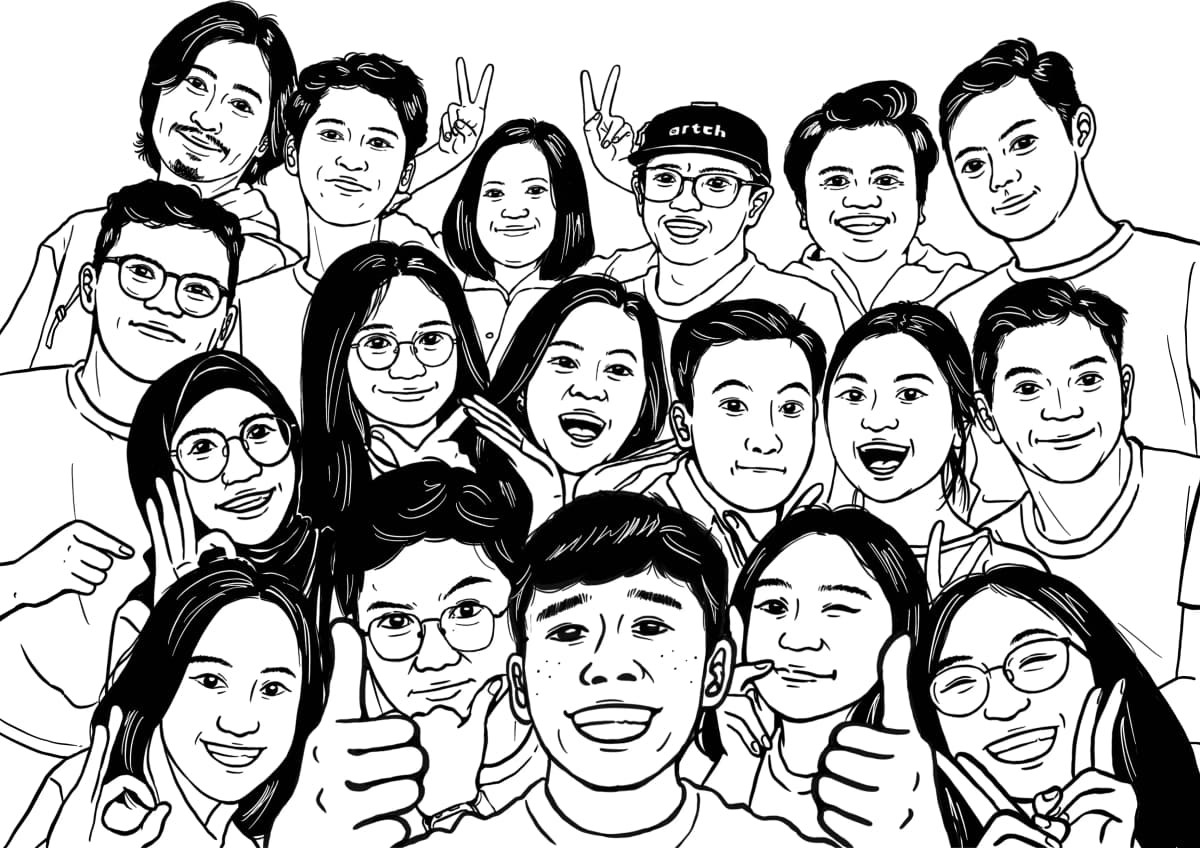
Meet the team behind BLUE Design System
The BLUE Team is a cross-functional team responsible for building, maintaining, and evolving the BLUE design system to ensure consistency, scalability, and quality across products. The team brings together multiple disciplines, each contributing to the system’s growth and sustainability:
- UX Engineers who build and maintain core design system foundations, including UI components, design tokens, icon libraries, tooling, and the design system documentation site, while ensuring scalability, accessibility, and alignment between design and engineering.
- Product Designers who define visual language, interaction patterns, and component behavior to deliver consistent and intuitive user experiences.
- Asset Team including illustrators and icon designers, who create and maintain scalable visual assets that support a cohesive visual language.
- UX Writers who craft clear, consistent, and user-friendly microcopy aligned with the design system and brand voice.