


For the past few years, my life has felt like a marathon with no finish line.
This journey began when I first set foot in Blibli. Starting as a curious intern, I was eventually, alhamdulillah, trusted to join as a full-time employee in the UX Engineer position.
My days after that were filled with a nearly identical routine: coding, meetings, and late-night debugging to meet deadlines that never seemed to end.
But strangely, I enjoyed it all.
There was a unique satisfaction in seeing the pixels I arranged on the screen being used by millions of people. There was a sense of joy when a feature finally went live after numerous revisions and a long process. Unconsciously, that routine repeated itself and slowly became my comfort zone for years.
However, behind all the hustle of the products I was building, there was one thing that was continuously neglected: my own home - my portfolio.
The Trap of Routine and the Perfectionist's Ego
The desire to create a portfolio had been there for a long time. However, every time I wanted to start, I always had a thousand reasons to postpone it. Whether it was because I was tired after work, or honestly, just feeling lazy, lol. My thought process was always the same:
“I'll do it on the weekend or after this sprint.”
But when the weekend or free time arrived, I would think:
“I've been coding all week at the office, do I really have to code on the weekend too?”
In the end, I chose to rest, and the intention to build my portfolio was postponed once again.
But it turned out the problem wasn't just fatigue and laziness. The biggest enemy came from within myself: excessive perfectionism.
Every time I opened my code editor to start, I was trapped by the desire for everything to be perfect from the get-go. My head would suddenly fill with endless questions:
“Ugh, what should the design be like to look cool?”
“What's a good tech stack to use?”
“Should I make a simple static site or go all out with a dynamic one and a database?”
“What content should I include to look professional?”
Because the standards I set for myself were too high, this portfolio project was never truly finished. It always ended up as a draft on my laptop, or if I forced it, the result looked half-baked and far from presentable.
A Harsh Warning Called a Layoff
Until finally, the storm came. The news of layoffs was no longer just a story on LinkedIn, but a reality I had to face myself. In an instant, the routine that had consumed my time for years was gone.
This was when the harsh slap of reality truly felt real.
When I started browsing job sites and applying for new positions, I realized I didn't have much to show. Most of my work from over the years was stored in the company's internal systems, which I could no longer access.
That reality slowly eroded my confidence, as I lacked tangible proof of what I had accomplished over the years.
Starting from the Ruins
From that point, I realized the importance of having a portfolio to document my professional journey. Finally, I tried to build it all again, slowly.
I started contacting old colleagues, searching for remaining files and documentation, opening old folders on my laptop, and trying to recall the projects I had worked on.
In that process, I realized that building a portfolio isn't just about a good design or the technology used. More than that, it's about being honest with the process, valuing every track record, and most importantly: daring to start, no matter how small.
I finally decided to cast aside the perfectionist ego that had been holding me back. I realized that the best portfolio isn't the one with the grandest animations or the most complex tech stack, but one that is actually finished and accessible.
From there, I began to understand that what I needed wasn't a huge burst of motivation, but a more realistic mindset to get this project moving.
Done is Better Than Perfect
That principle is what ultimately saved me from the ruins. I started to devise a new, more realistic strategy.
- Iteration, Not Instant Perfection Just like building a product in the professional world, I treated this portfolio as an MVP (Minimum Viable Product). My initial goal was very simple: a homepage that clearly displayed my information and a few basic case studies. From that small foundation, I continued to iterate until this "home" grew with various features inside.
- Focus on Value, Not Just Visuals Instead of worrying about design trends that change every week, I focused more on how to tell my story as a UX Engineer. How I bridge design and code, how I contribute to product development, and what problems I successfully solved.
- Fighting Laziness with Small Consistencies I no longer waited for the weekend to have a "coding marathon". Now, I choose to chip away at it slowly in my spare time after job hunting, with short sessions. I'd use this time for small tasks like creating a single component, writing a paragraph of copy, or just tidying up the folder structure.
- Developing Features Gradually Over time, this "little home" grew bit by bit. I started adding various features to enrich its functionality, like a roadmap page for perspectives and ideas, and a lounge page as a space for discussion and expanding connections, plus other interactive features. Slowly, this portfolio became more than just a project showcase, but a more lively and interactive space.
The Home Finally Stands
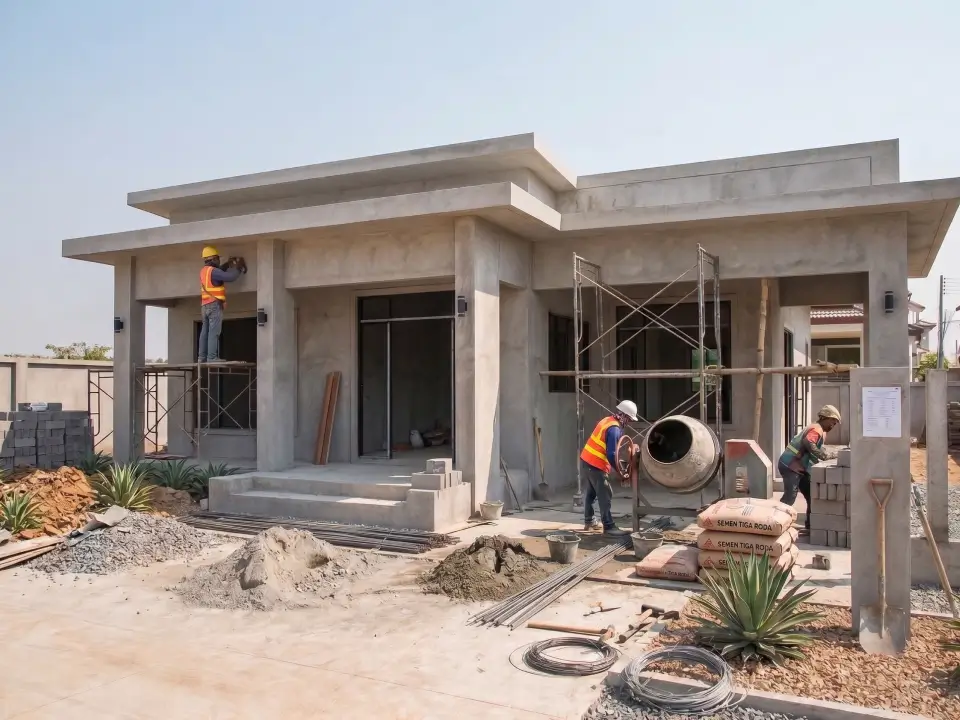
After a process of deconstruction and reconstruction, fighting self-doubt, and gathering the remaining fragments of documentation, alhamdulillah, my digital home was finally finished and "habitable".
Seeing the portfolio finally go live brought an incredible sense of relief. My confidence slowly began to grow back. This home might not be completely perfect; there are still many corners that need tidying up and decorating. However, this home is tangible proof that I did not give up on my situation.
The bitter experience of the layoff storm taught me a valuable lesson that I will always remember:
As engineers, we are often too busy building and beautifying other people's buildings that we forget we also need a shelter for ourselves.
Don't wait for the storm to start building your home. Because when that storm comes, that home will be the only place to stand again.